Designing a custom kitchen is one of the most important decisions in a home. Not only because of the investment, but because it’s a space that is used every single day.
Most of the problems we see in kitchens are not related to materials… but to planning mistakes that could have been avoided from the beginning.
In this article, we share the most common mistakes when designing a custom kitchen and, more importantly, how to avoid them before fabrication.
1. Designing with aesthetics as the only priority
One of the most common mistakes is starting with colors, finishes, or styles without first solving the layout.
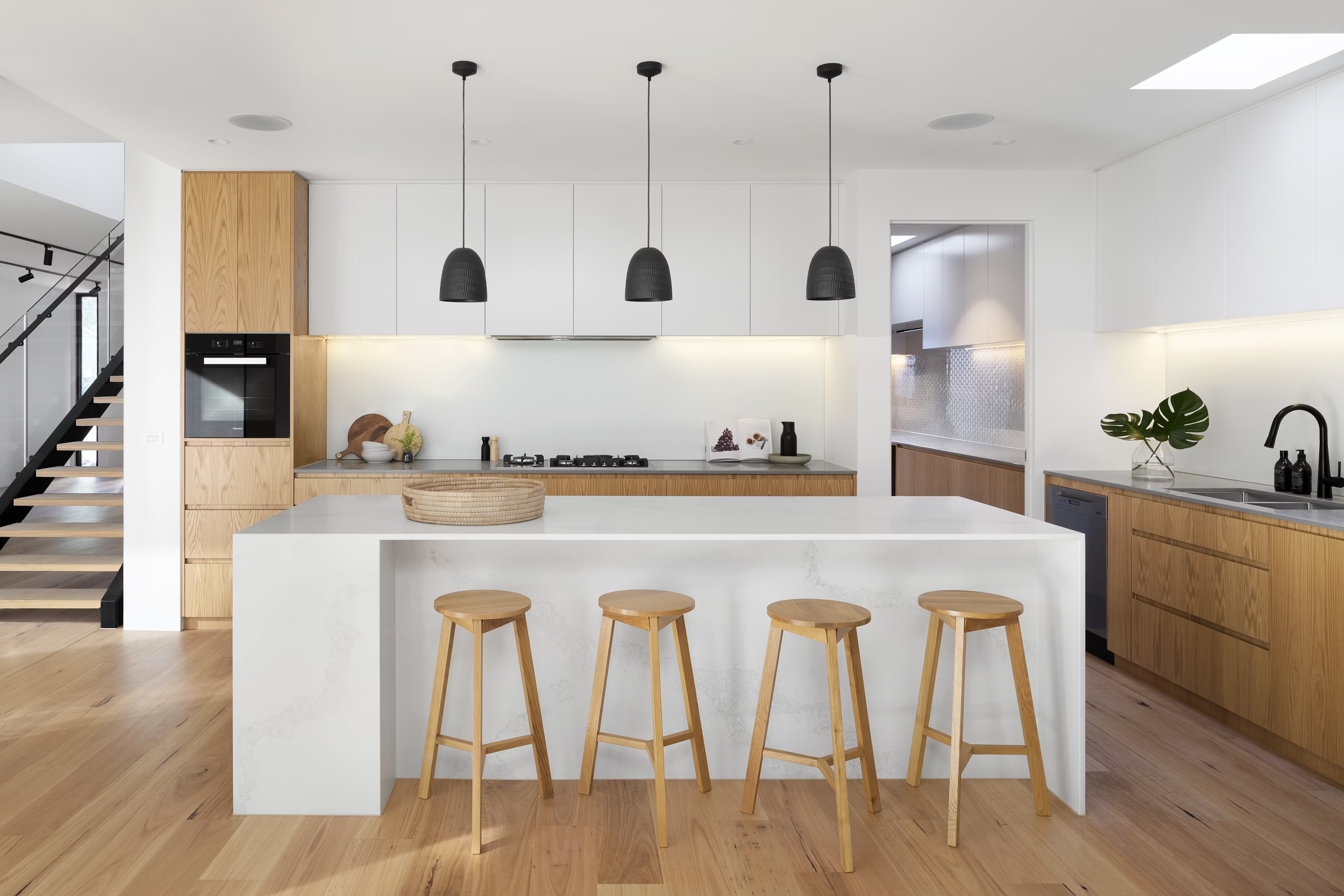
The result is often a beautiful kitchen that is not very practical: narrow walkways, limited work areas, or poorly placed appliances.
How to avoid it:
Start by defining the layout, measurements, and work zones. Once the kitchen functions properly, it’s the right moment to choose materials and finishes.
2. Walkways that are too narrow
When space is not planned correctly, walkways become tight and the kitchen feels uncomfortable.
This is especially noticeable when:
Oven or dishwasher doors are open
Two people are cooking at the same time
An island is poorly sized
How to avoid it:
Leave comfortable walkways that allow you to move freely. A well-designed kitchen should never feel cramped, even in small spaces.
3. Not considering daily workflow
A kitchen is not used randomly. There is a natural order: storing, washing, preparing, and cooking.
When the refrigerator, sink, and cooktop are poorly positioned, everything becomes slower and more uncomfortable.
How to avoid it:
Design the kitchen based on how it will be used every day, not just how it looks in photos. The workflow should be logical and free of unnecessary crossings.
4. Lack of preparation space
Many kitchens have plenty of cabinets but very little free countertop space.
This often leads to cooking on the stovetop or next to the sink, which is neither practical nor safe.
How to avoid it:
Make sure there is at least one continuous countertop area dedicated to food preparation. In small kitchens, this space is even more important than adding decorative modules.
5. Doors and drawers that get in the way
Another common mistake is not considering the real opening space of doors and appliances.
This leads to:
Drawers that don’t open fully
Doors that collide with each other
Poorly used corner spaces
How to avoid it:
Door and drawer openings should be reviewed during the design phase. A good design prevents “dead zones” and everyday usability issues.
6. Poorly planned ventilation
Range hoods are often chosen for their appearance, but their performance is rarely planned correctly.
Poor ventilation causes:
Persistent odors
Grease buildup on cabinets
Humidity in the kitchen and nearby areas
How to avoid it:
Define the hood type and air outlet from the beginning. In open kitchens, proper ventilation is not optional.
7. Insufficient lighting
A single general light is not enough for a kitchen.
This creates shadows on the countertop and makes the space feel dark, even when it’s brand new.
How to avoid it:
Combine general lighting with task lighting, especially under upper cabinets. Good lighting completely changes the user experience.
8. Too few electrical outlets
Today we use many small appliances: blender, coffee maker, toaster, air fryer, and more.
Without enough outlets, the kitchen quickly fills up with extension cords.
How to avoid it:
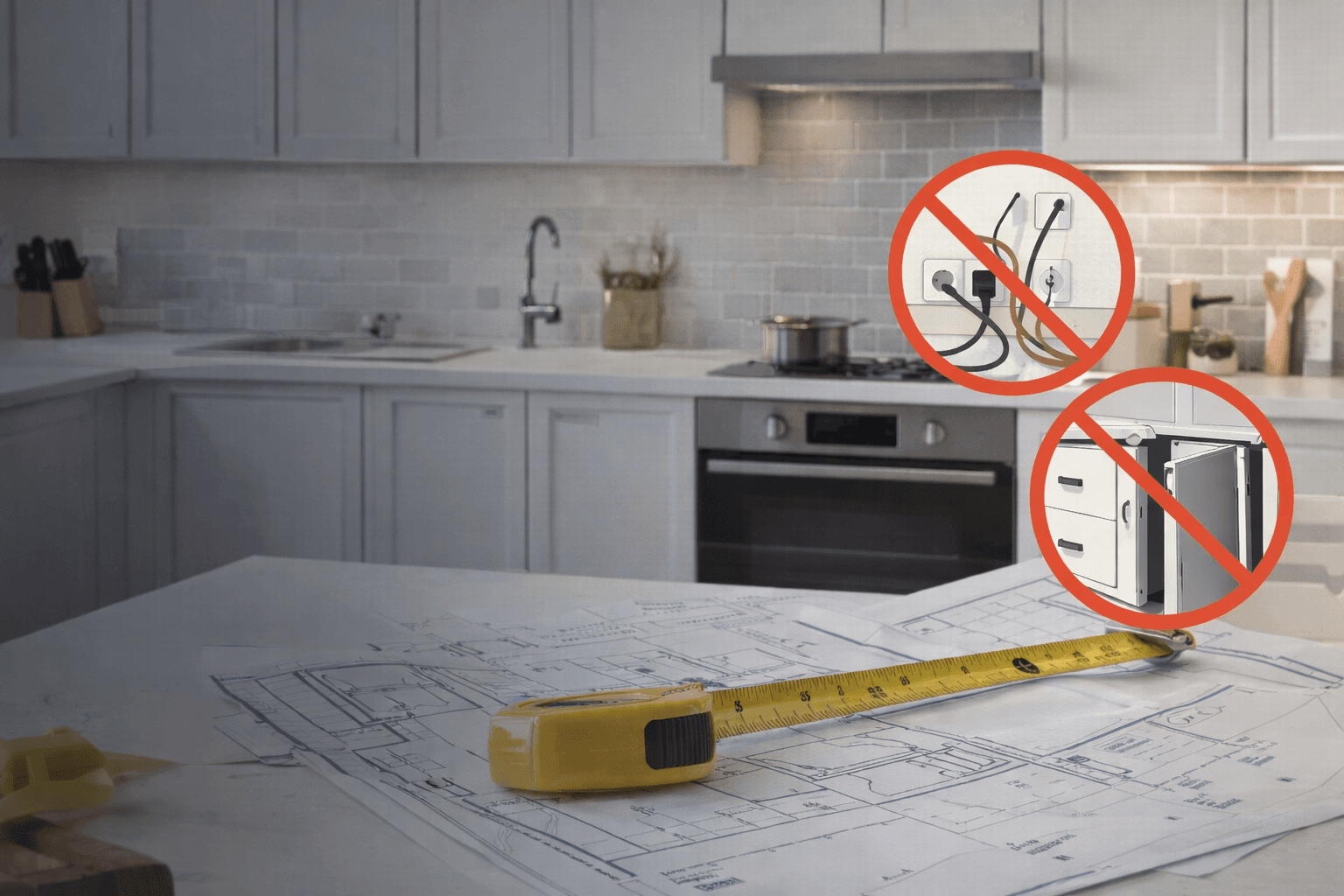
Plan electrical outlets during the design phase, especially in work areas and islands. After fabrication, fixing this is often difficult and expensive.
9. Choosing materials without considering real use
Not all materials work the same for every household.
A kitchen that is used daily has very different needs than one used occasionally.
How to avoid it:
Choose materials based on ease of cleaning, durability, moisture resistance, and heat exposure. Good design balances aesthetics and durability.
10. Fabricating without checking walls and floors
Uneven walls and floors are more common than they seem.
If they are not considered before fabrication, the result is forced adjustments and visible gaps.
How to avoid it:
Before fabrication, check levels, plumb lines, and real site conditions. A well-planned design accounts for adjustments from the start.
Before fabricating your custom kitchen, review this:
Comfortable and functional layout
Properly sized walkways
Dedicated preparation area
Adequate lighting
Well-planned ventilation
Sufficient electrical outlets
Materials suited to your lifestyle
Designing right from the start makes all the difference
At Casa Áurea, we design custom kitchens focused on functionality, comfort, and durability—without losing sight of aesthetics.
If you’re about to start your project, proper planning can save you many problems down the road.
You can contact us for guidance and to request a quote for a custom kitchen designed right from the beginning.